There’s rarely one clear moment when a business decides to redesign its website. Usually it builds up slowly. A client mentions the site feels dated. A visitor complains about using it on their phone. Someone finally opens the analytics dashboard and doesn’t like what they see.
Here are five things worth checking, and what each one actually tells you about your site.
1. High Bounce Rate on the Homepage
When visitors hit your homepage and bounce within seconds, the content usually isn’t what’s driving that. It’s about first impressions, and design does most of the work in forming one. Visitors decide whether a site feels trustworthy almost immediately, often before they’ve read a single word.
Worth checking specifically:
- Homepage bounce rate, not your blended site average
- Average session duration
- Mobile bounce rate against desktop bounce rate
If there’s a big gap between mobile and desktop, that usually means the site works on one and struggles on the other.
A web designer who spends her days auditing small business sites explained it like this: ‘People tend to assume a high bounce rate points to weak writing. More often, it’s just that something about the site felt wrong in those first few seconds. Design is convincing before anyone gets to the content.”
2. The Design Feels Outdated
This is probably the easiest sign to spot, and somehow still the one people put off dealing with the longest. A simple, timeless design is one thing. A genuinely outdated one is another, and most site owners already know which side theirs falls on.
Some common giveaways:
- Stock photos that look pulled from an old corporate brochure
- Text packed together with barely any spacing
- Layouts designed with desktop in mind first, with mobile squeezed in afterward
- Leftover design habits like heavy drop shadows, tiny sliders, or autoplay audio
- Design standards shift for a reason. What read as polished five years back can look neglected now, and a site stuck in an older style can make visitors assume, fairly or not, that the business behind it hasn’t kept pace either.
3. The Site No Longer Matches the Business
This one’s easy to overlook, since it doesn’t show up as a design issue right away. It’s a business issue that eventually shows up as a design problem.
A few common versions of this:
- The business adds new services, but the homepage never catches up to mention them
- The business expands its market, say from local to national, but the site still talks to the old audience
- A rebrand happens, and the website keeps describing the company as it used to be
Say a consulting firm used to handle one-off projects and has since shifted toward retainer packages. If the homepage still says “get in touch about your next project” with zero mention of retainers, a new visitor has no way of knowing that’s even an option.
If someone can’t figure out what your business actually does within about ten seconds on your homepage, that’s not something better copy fixes on its own. It usually means the site needs to be rebuilt around where the business stands today, not where it stood when the site launched.
4. Every Small Update Turns Into a Whole Process
This one hides in the background for a while before it becomes obvious. If changing one line of text means emailing a developer, if adding a single product means rebuilding half a page, if nobody internally can log in and make a basic edit without worrying they’ll break something, the site’s turned into more of an obstacle than a tool.
A web design refresh usually fixes this by moving the site onto something more flexible, a setup your own team can manage day to day. If updating something as simple as a phone number turns into a whole ordeal, that’s telling you something about the backend, not the content.
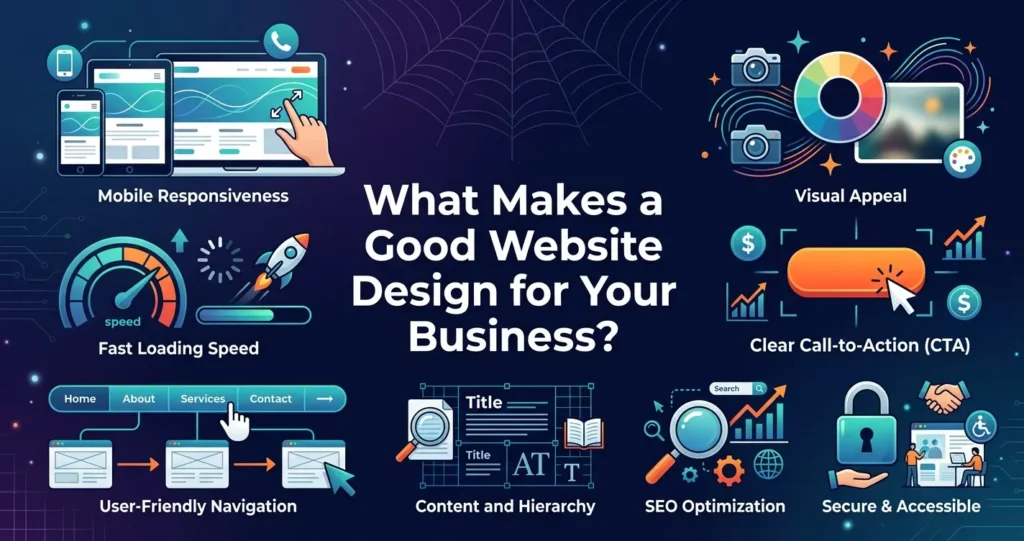
5. It Doesn’t Work the Same Way Across Devices
Test this yourself. Pull the site up on a phone, a tablet, and a laptop, and compare.
If it feels like three separate experiences, tiny buttons, text running off the screen, forms that stop working halfway through on mobile, that’s a functional issue, not just an inconsistency. Given how much traffic now comes through phones, a clunky mobile version is often the very first thing a new visitor runs into.
A few mobile issues worth watching for:
- Menus that don’t collapse properly on small screens
- Forms that are awkward to fill out with a thumb
- Text small enough that people have to zoom in
- Buttons placed too close together, leading to mis-taps
If a site wasn’t built mobile-first to begin with, there’s a good chance it’s been patched over time instead of properly designed for phones.
How Many Signs Actually Matter?
You don’t need all five to justify a redesign. If even two feel familiar, it’s worth taking seriously. Websites rarely fail all at once, they slip gradually, and by the time every issue is obvious, the business has usually already lost visitors and leads without realizing it.
Catching these early also means the fix doesn’t have to be dramatic. Sometimes it is a full rebuild. Other times it’s smaller, updated visuals, better mobile handling, sharper messaging, without starting over completely.If your website also needs a stronger visual identity alongside a redesign, Professional Logo Design can help create a brand image that looks polished, memorable, and built to grow with your business.
Businesses that regularly review their website as they grow are far less likely to find themselves wondering whether it’s time for a redesign after they’ve already lost valuable traffic and leads. Making improvements as your business evolves helps keep your website relevant, user-friendly, and effective. If you want to learn more about improving your website and creating a better online experience, let our experts help you get started. Contact us today.