At some point every business owner building a website runs into the same fork in the road. Do you go with a template and get something live in a week, or do you invest in a custom-built site that takes longer but gives you more control? And right behind that question comes the one everyone actually wants answered first: what is this going to cost?
Both questions are connected, so it’s worth walking through them together.
What a Website Template Actually Gives You
A template is a pre-built design you customize with your own content, colors, and images. Platforms built around templates have gotten genuinely good over the years. You can launch a decent-looking site in days, not months, and you don’t need to know how to code anything.
Website templates work well when your needs are straightforward. A local service business that needs a homepage, a services page, a contact form, and maybe a gallery doesn’t need custom development. The template route gets you online fast, at a fraction of the cost, and for a lot of small businesses, that’s exactly the right call.
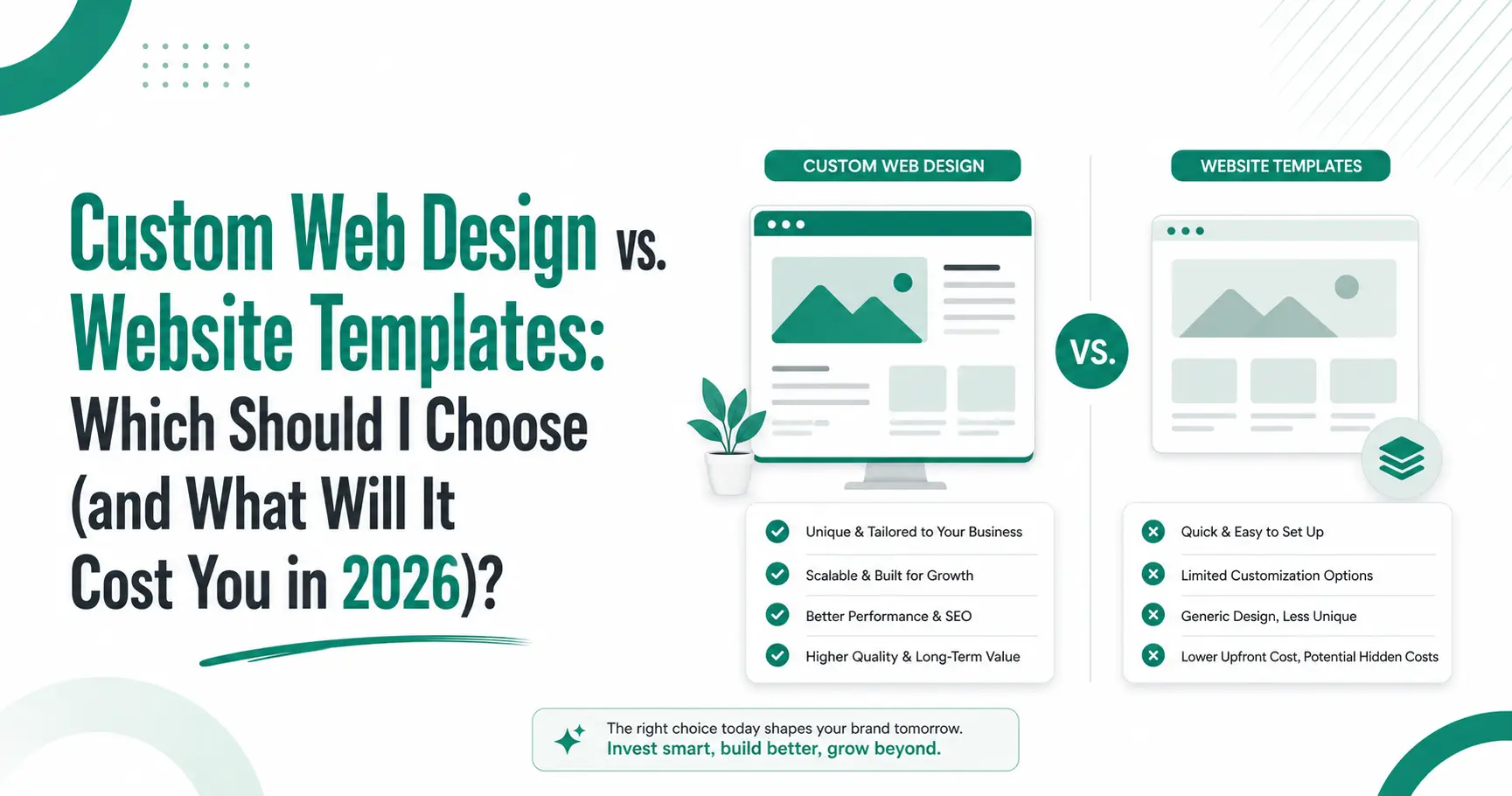
The tradeoff is flexibility. You’re working within someone else’s structure, which means certain features, layouts, or integrations either aren’t possible or require awkward workarounds. And because thousands of other businesses are using the same templates, your site can end up looking a lot like everyone else’s in your industry, even with different colors and photos.
What Custom Web Design Actually Gives You
Custom web design means building the site from the ground up around your specific brand, goals, and functionality needs, instead of adapting to a pre-built structure. This is the right call once your needs get more specific: multi-location businesses, custom booking or ordering systems, integrations with internal tools, or a brand that genuinely needs to stand apart visually from competitors using the same templates.
The obvious tradeoff is time and cost. Custom work takes longer because everything is built rather than assembled, and it costs more because you’re paying for design and development hours instead of a subscription to a pre-made system. But you get a site that’s actually yours, built around what your business needs rather than what the template allows.
Comparing the Two Directly
If you’re weighing custom design versus templates, it usually comes down to a few honest questions. How specific are your functionality needs? A simple brochure site rarely justifies custom development. How important is standing out visually in your industry? If your competitors are all using the same handful of templates, custom design becomes a real differentiator. How much are you planning to scale? A template that works fine for one location can become a headache once you’re managing five.
There’s no universally right answer here. It’s a genuine tradeoff between speed and cost on one side, and control and differentiation on the other.
What a Professional Website Actually Costs in 2026
This is where things get murky for a lot of people, because pricing across the industry is genuinely wide. Here’s a realistic breakdown of what to expect.
Template-based websites built through a builder platform typically run on a monthly subscription rather than a one-time fee, often somewhere between a basic starter plan and a more built-out business tier, depending on features like online ordering, booking systems, or ecommerce. If you’re hiring someone to set up and customize a template for you rather than doing it yourself, expect a one-time setup fee on top of that subscription, which varies quite a bit based on how much customization is involved.
Custom-built websites are priced project by project rather than as a subscription, and the range is wide because “custom” covers everything from a five-page business site to a complex platform with logins, databases, and custom integrations. A straightforward custom brochure site sits at the lower end of that range. A site with booking systems, ecommerce, or custom functionality moves well beyond that. Larger, multi-location businesses or anything requiring ongoing custom development sit higher still.
A few things move the price in either direction regardless of which route you choose. The number of pages and how much content needs to be written or migrated. Whether you need custom photography instead of stock images. How complex the functionality is, booking systems and payment integrations cost more than static pages. And whether ongoing maintenance, hosting, and support are bundled in or billed separately.
Questions Worth Asking Before You Pick Either Route
Before committing to a template or a custom build, it helps to get clear on what’s actually included in any quote you receive. Does the price cover mobile responsiveness and basic SEO setup, or are those extras? Is there a maintenance plan included, or will you need to handle updates and hosting yourself? How many rounds of revisions come with the price before extra changes cost more? And does the timeline realistically match your business needs, or are you being sold speed you don’t actually need at the cost of quality you do?
So, Which One Fits Your Business?
If you’re a small, single-location business without complicated functionality needs, a template is usually the smarter starting point. It gets you online fast, costs less upfront, and you can always move to custom development later once the business justifies it.
If you’re already established, need functionality a template can’t handle, or you’re in a competitive market where standing out visually actually matters, custom web design earns its higher cost by giving you something that’s genuinely built around your business instead of adapted to fit someone else’s framework.
Either way, the goal isn’t picking the fanciest option, it’s picking the one that actually fits where your business is right now.
Trying to figure out which route makes sense for your business? We build both custom websites and template-based sites for restaurants, hotels, and hospitality brands, along with the logo and brand identity work to match, so you’re not guessing at what fits your budget and your goals.
Get in touch with our team and we’ll walk you through what makes sense for your project and what it would realistically cost.