Sit in on enough brand kickoff meetings and you’ll notice a pattern. Three logo concepts go up on the screen, everyone leans in, there’s back and forth about which one “feels right,” and by the end someone’s picked a winner. Then the website? Built in two weeks, usually by whoever happened to be free that sprint, dropped into a template nobody actually sat down and reviewed.
That’s the wrong order to do things in. And most businesses don’t realize how much it’s costing them until traffic numbers start looking off.
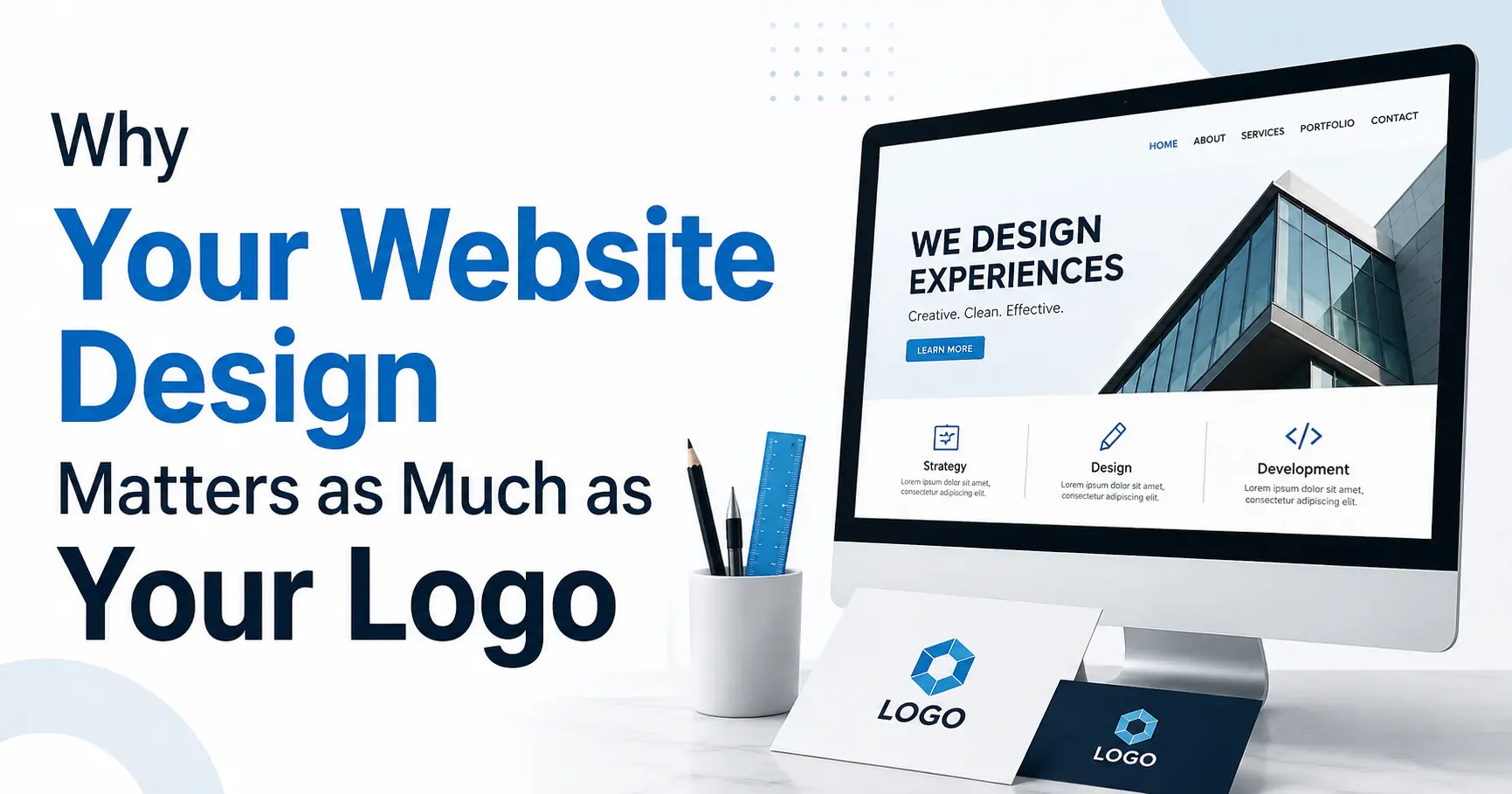
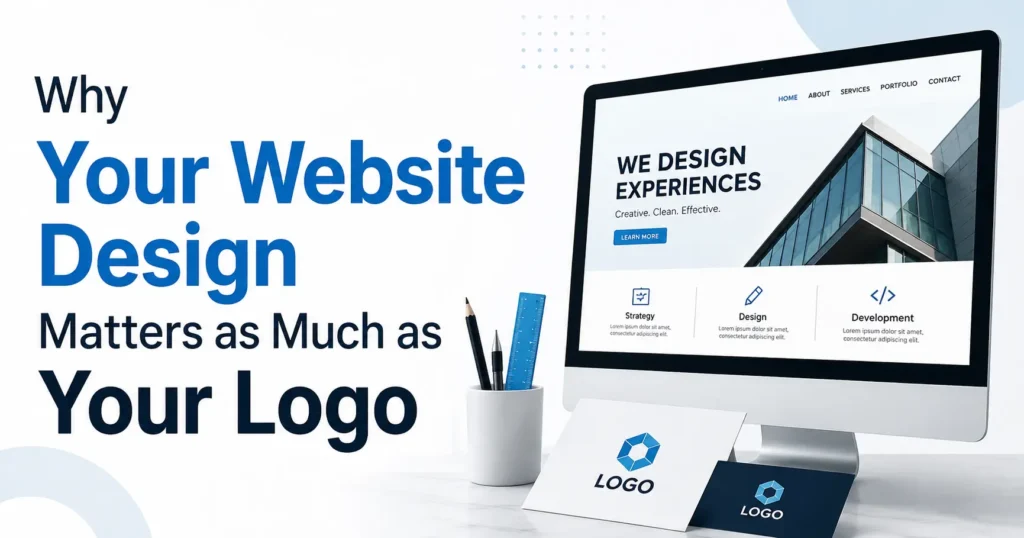
Think of it this way. Your logo is the outfit. Your website is the personality underneath it. People clock a logo in under a second, sure, but they spend real time inside your website, scrolling, clicking, getting annoyed by a slow load or impressed by a smooth one. A logo just sits there looking good. A website actually has to work.
This is really what the website design vs logo design conversation should be about. Not which one wins. More like, why are so many companies still making these two decisions separately in the first place.
Your Logo Makes a Promise. Your Website Has to Keep It.
A logo’s got one job, and it does it well: recognition. Show someone a swoosh, a bitten apple, golden arches, and their brain fills in the rest without even trying. That’s the whole point of a logo, it’s built to be simple enough to survive on a business card, a tiny app icon, and a highway billboard, all without changing.
Your website doesn’t get off that easy. It has to follow through on whatever the logo hinted at. Say your branding screams “premium,” but the site takes five seconds to load, the layout’s a mess, and the font looks pulled from 2009. People pick up on that mismatch fast. And they’re not going to think, well, maybe the logo team and the web team just weren’t talking to each other. They’ll just think you’re not what you claimed to be.
Talked shop recently with a brand designer who’s built her career working with early-stage startups. One comment she made has really stuck with me: “Six weeks. That’s how long clients will spend perfecting a single logo file, then hand the homepage off to whoever’s free. I get why. But your logo doesn’t have a bounce rate. Your website does.”
Brand Consistency Is More Than Just Matching Colors
People hear brand consistency and think “oh, use the same blue everywhere.” That’s part of it, but honestly it’s the smallest, easiest part.
Real consistency is someone scrolling your Instagram, clicking through to your website, maybe picking up a printed flyer somewhere, and feeling like it’s the same company talking to them the whole time. Same tone. Same visual language. Same personality showing up whether that personality is playful, serious, a little edgy, whatever it is.
Here’s where it usually falls apart:
- Tone mismatch – logo feels premium and minimal, copy on the site reads like a weekend clearance sale
- Visual mismatch – brand palette is soft and earthy, but the site’s full of harshly lit stock photos that don’t match at all
- Experience mismatch – everything about the branding says “effortless,” then checkout takes six steps and throws two error messages at you
None of that traces back to the logo. It’s an execution gap, and it happens because the website ends up treated like an afterthought instead of part of the same identity.
A Quick Example
Imagine two coffee brands using the exact same logo. Simple black and white cup icon, nothing fancy. Brand A’s site loads fast, uses soft muted tones, and the copy reads like a friend telling you about their favorite spot. Brand B, same logo, but the site’s cluttered with pop-ups, autoplay video, and copy that won’t stop yelling in exclamation points.
Same logo. Totally different brand living in your head five seconds later. That gap right there, between designing a mark and designing an actual experience, is why the website carries just as much weight as the logo it’s supposed to represent.
A Few Web Design Tips Worth Actually Following
You don’t need a full six-figure redesign to close this gap. Some of it’s pretty basic:
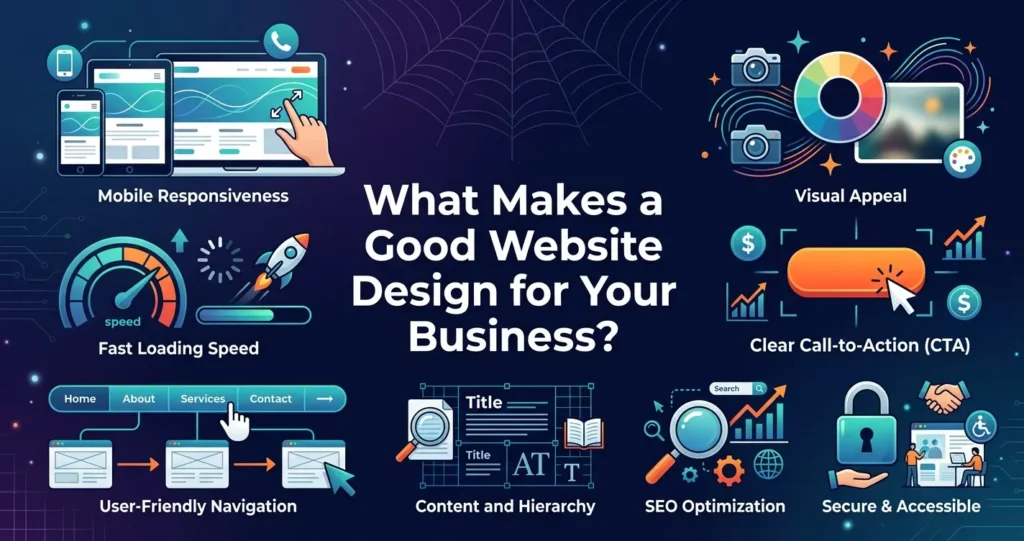
- Match your typography to your brand’s actual personality. A playful brand doesn’t need a stiff corporate font, and a luxury brand shouldn’t look like it was built for a school project.
- Keep the color palette consistent everywhere, not just in the logo file. Buttons, backgrounds, hover states, all of it.
- Write in the brand’s real voice. If your Instagram captions are casual and a little funny, the website copy shouldn’t suddenly read like a legal disclaimer.
- Don’t ignore load speed. A gorgeous design that takes eight seconds to show up isn’t gorgeous, it’s just a bounce waiting to happen.
- Design for the whole scroll, not just the homepage banner. Most people experience a brand in pieces as they move through a site, not in one single glance.
None of this means reinventing who you are as a brand. It just means making sure the website is actually speaking the same language as everything else you’ve already built.
The Companies That Get This Right Don’t Split the Work
The companies that get this right don’t keep a “logo team” in one room and a “website team” in another, occasionally trading notes. Both come out of the same brand brief, the same tone guidelines, the same read on who they’re actually talking to. The logo and the website aren’t two separate projects that happen to share a color palette. They’re one identity, just shown in two different formats.
And that’s really the whole point here. Your logo gets someone’s attention for half a second. Your website is what has to hold that attention, build some trust, and turn it into something real, a sale, a signup, whatever the goal is. One without the other is just half a brand, dressed up but with nothing to back it up.
So next time a rebrand or redesign comes across your desk, don’t treat the website like paperwork that happens after the “real” creative work’s done. It’s not an afterthought. It’s the place where your brand either proves itself, or quietly loses people who liked the logo just fine but walked away anyway.