A logo is a single identifying mark. A brand identity is the complete designed system that the logo sits inside, including typography, colour, imagery, layout and voice. A brand is the reputation that lives in your customer’s head. You design the first two. You can only influence the third.
These three words get used interchangeably in briefs, quotes and pitch decks, and the confusion has a real cost. Businesses buy a logo when they needed an identity system, then wonder why their website, packaging and social posts look like they came from three different companies. Or they commission a full identity when a well-built logo and a basic style sheet would have carried them through their first two years.
This post defines each term precisely, shows what is actually included in each, and gives you a way to decide which one your business needs right now.
The logo is one asset. The identity is the system. The brand is the perception.
You own your logo and your identity. Your customers own your brand.
Most small businesses need a logo plus a minimum identity system, not a full brand programme.
Buying a logo alone is the most common cause of inconsistent-looking businesses.
Brand strategy should come before identity design whenever budget allows.
The three layers, defined
A logo is an identifier
A logo is a graphic mark that identifies an organisation, product or service. Its job is recognition and attribution. When a customer sees the mark on a van, a package or a search result, they should know instantly whose it is.
That is the whole job. A logo is not required to explain your services, communicate your values, or tell your story. Those are asks that get placed on logos in client feedback rounds and they are the reason many marks end up overloaded. The Nike swoosh does not communicate athletic performance on its own. It acquired that meaning through decades of consistent association.
What a logo file set should actually contain when delivered properly:
Primary lockup, meaning the full mark with the business name
Secondary or stacked lockup for different proportions
Icon or symbol only version for small applications
Single colour and reversed (light on dark) versions
If a logo package does not include those variants, it will break the first time you need it on a dark website header or a stitched polo shirt.
Who owns the logo once it is designed?
You should, and it needs to be in writing. Ownership of the copyright and the vector source files should transfer to you on final payment, and that clause belongs in the contract before work begins. This catches people out with cheap logo marketplaces and template generators, where you often receive a licence to use an image rather than ownership of an asset. A logo you cannot legally own, defend or edit is not an asset, it is a rental.
A brand identity is the system
A brand identity is the full set of designed assets and rules that make everything your business produces look like it came from the same place. The logo is one component. The system is what makes the logo usable.
A working brand identity typically includes:
Logo suite: all variants described above
Colour palette: primary, secondary and functional colours with HEX, RGB, CMYK and Pantone values, plus accessibility contrast guidance
Typography system: display and body typefaces, weights, sizes, line heights and a licensed web font plan
Imagery direction: photography style, illustration style, iconography set
Layout rules: grid, spacing, alignment principles
Applications: business cards, letterhead, email signature, social templates, packaging, signage, vehicle livery, presentation deck
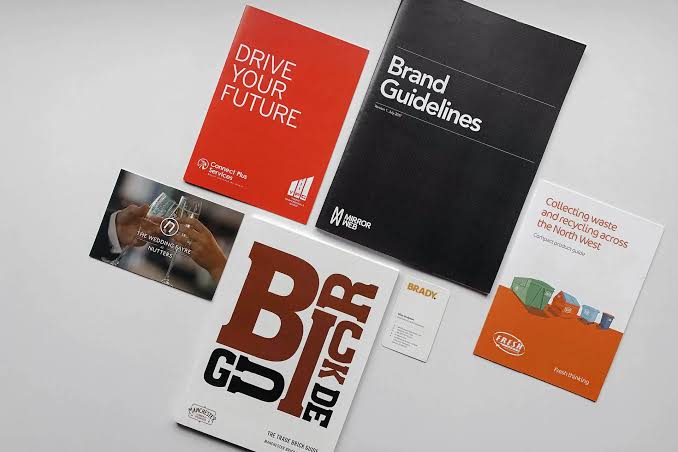
Brand guidelines document: the rules that let a third party apply the identity correctly without asking you
The identity is what a marketing agency, a printer, a web developer or a new hire uses to produce on-brand work without your involvement. That is the practical value. A logo with no system around it means every new asset is a fresh negotiation.
Is branding the same as brand identity?
No, though the words get swapped constantly. Brand identity is the designed system described above: a fixed set of assets and rules. Branding is the ongoing activity of shaping how people perceive you, which includes the identity but also your pricing, your service, your tone in emails and how you handle complaints. Identity is a deliverable. Branding is a practice that never finishes.
A brand is the reputation
A brand is what people think and feel about your business when they encounter it. It is formed by every touchpoint: how quickly you answer the phone, how the product performs, what your refund policy is like, what a friend said about you, and yes, how the identity looks.
You do not design a brand. You design the inputs and then manage the delivery. A well-designed identity applied to a business with poor service builds a strong negative brand faster than a weak identity would have.
The clearest analogy: the logo is the signature, the identity is the handwriting, and the brand is the reputation of the person signing.
This is why a logo and a brand are not interchangeable, even though people use the words that way. You own and control the logo. Your customers own the brand, and you only influence it. The mark is a trigger that retrieves whatever they already believe about you. If that belief is good, the logo does a great deal of work. If it is bad, the logo is simply a faster way for them to recognise a business they intend to avoid.
Comparison at a glance
Logo
Brand identity
Brand
What it is
A single mark
A designed system of assets and rules
Perception held by customers
Primary job
Identification
Consistency and recognition across touchpoints
Preference and trust
Who controls it
You
You
Your customers, influenced by you
Typical deliverable
Vector files and variants
Guidelines document plus asset library
None, it is an outcome
Typical timeline
1 to 3 weeks
4 to 10 weeks
Years
Changes how often
Rarely, every 10 years or more
Refreshed every 3 to 5 years
Continuously
Which one do you actually need?
Start with a logo and a minimum identity if: you are pre-launch or under two years old, you have one or two products, and your budget is limited. Minimum identity means the logo suite, a two or three colour palette, two typefaces and a one page usage sheet. This is enough to keep a website, social channels and print collateral coherent.
Commission a full brand identity if: you are scaling, you have more than one person or agency producing marketing material, you are entering retail or packaging, you are raising investment, or your current assets already look inconsistent across channels.
Invest in brand strategy first if: you are unclear on who your customer is, what you sell that competitors do not, or how you want to be positioned. Strategy is not design. It is the set of decisions that design then expresses. Skipping it means the design conversation has no criteria, which is why those projects drag through endless revision rounds.
What comes first, brand strategy or logo design?
Strategy, whenever the budget allows. Design decisions need criteria, and strategy is where the criteria come from. Without it, feedback rounds have nothing to be judged against and the project drifts on personal taste. A practical sequence that works for most businesses: positioning and naming, then logo and core identity, then identity extensions as you need them.
Can you start with a logo and add the identity later?
Yes, and most businesses do. The condition is that the logo is delivered properly, meaning the full variant set and editable vector files. When that is in place, the later identity work builds on the mark instead of starting over. When it is not, you pay twice, because the designer picking up the project has to rebuild the logo before they can extend it.
How much identity does a small business actually need?
For most businesses under ten people, the working minimum is a logo suite, a defined palette of two or three colours, two typefaces and a one page usage sheet. That is enough to keep a website, social channels and print collateral coherent. Add templates as the volume of material grows, and add a full guidelines document at the point where people outside your team start producing work in your name.
Three mistakes that cost money
Treating the logo as the whole project. You get one file and no rules. Six months later your website, your invoices and your Instagram use three different blues and four typefaces. Fixing this later costs more than including a basic system at the start.
Asking the logo to carry the strategy. When a business has not decided what it stands for, feedback on the logo becomes unanchored. Rounds multiply because there is no agreed standard to judge against.
Rebranding when the problem is not visual. If sales are flat because the offer is wrong or the service is inconsistent, a new identity will not fix it. It will just make the same problem look more expensive.
If you are unsure whether you need a logo, an identity system or a full rebrand, the honest answer usually comes out of a short conversation about your growth stage and how many people produce your marketing material. Talk to our team or see what is included in our brand identity packages.
About Brittany J.
Creative and detail-oriented Content Writer with expertise in crafting engaging, SEO-friendly, and conversion-focused content for businesses across various industries. Specializes in website copy, blog articles, landing pages, product descriptions, email campaigns, and marketing content that strengthens brand identity and drives customer engagement. Passionate about transforming ideas into compelling stories that connect with audiences while supporting business growth.